 Expert Garbage Disposal Installation In Stanwood
Have you ever stood at your kitchen sink, listening to that awful grinding sound, watching water pool instead of drain?
It’s one of those moments that can really throw off your whole day. You’re trying to clean up after dinner, and suddenly you’re dealing with a sink full of murky water and food bits that won’t go down.
Here’s something that might help you feel better: a garbage disposal typically lasts between 8 to 15 years with proper care and maintenance. That means your unit should work hard for over a decade if you treat it well.
I’m going to walk you through exactly when you need a repair versus a replacement, what causes common garbage disposal problems, and why professional installation matters so much for homeowners here in Stanwood, WA.
Stick with me, and you’ll discover how expert service can save you time and money while keeping your kitchen running smoothly.
Key Takeaways
- Garbage disposals last 8 to 15 years with proper care and maintenance, making them a long-term investment for your kitchen.
- Avoid putting bones, grease, fibrous foods, and starchy vegetables down your disposal to prevent jams and extend unit lifespan.
- Professional installation by experienced technicians ensures proper electrical and plumbing connections that protect your home’s plumbing system from damage.
- Persistent odors after deep cleaning indicate your disposal needs professional assessment or replacement to restore kitchen freshness permanently.
- Regular maintenance with cold water flushing, weekly ice and salt cleaning, and lemon peel grinding prevents clogs and eliminates odor problems effectively.
What Are the Benefits of Installing a Garbage Disposal?
A garbage disposal installation transforms your kitchen into a more efficient space by managing food waste right at the source. Your sink becomes a powerful tool for kitchen cleanup.
Modern garbage disposals process a variety of food scraps quickly and conveniently.
Installing a garbage disposal reduces the risk of kitchen clogs significantly. You’ll notice that daily kitchen tasks take less time when you can grind food waste instead of scraping dishes into trash cans. Your plumbing system runs smoothly for years to come.
Your investment pays dividends through extended appliance life and cleaner kitchen conditions. Most garbage disposals last between 8 to 15 years with proper use and care, giving you reliable performance throughout that entire span.
Maintained units help prevent odors and drainage issues that plague kitchens without this convenient feature. You gain peace of mind knowing your food waste management system works efficiently, keeping unpleasant smells at bay while protecting your pipes from debris buildup.
According to the Washington State Department of Ecology’s recent Organics Management Law, keeping food scraps out of landfills matters more than ever. Rotting organics in landfills produce harmful methane gas. When you use a garbage disposal correctly, you send food scraps to wastewater treatment plants instead. Some of these plants actually capture the waste to create biogas, turning your dinner scraps into renewable energy.
What Are the Signs That I Need a New Garbage Disposal?
Your garbage disposal works hard every day, but it won’t last forever. You need to watch for specific warning signs that tell you when replacement time has arrived.
Based on the standard estimated life expectancy chart from the International Association of Certified Home Inspectors (InterNACHI) and 2026 Angi cost data, the average disposal lasts about 12 years. Here’s the math that matters: if your unit is nearing that 12-year mark, a typical repair costs around $230, while a brand-new installation averages $550. That repair might seem cheaper, but you’re essentially putting money into a unit that’s already at the end of its useful life.
Factor | Repair | Replace |
|---|---|---|
Unit Age | Under 6 years | Over 10 years |
Average Cost | $230 | $550 |
Best Choice When | Unit is relatively new | Near 12-year lifespan |
Why Does My Garbage Disposal Jam or Struggle to Grind Food?
Hard materials like bones and fruit pits cause frequent jams in your garbage disposal. These items cannot break down like soft food waste, so they get stuck between the blades and prevent normal operation.
Starchy foods such as potato peels create another major problem. They absorb water and expand, which clogs your pipes and makes the disposal struggle to grind anything else.
Fibrous foods including celery wrap around the blades and jam the mechanism completely. Grease buildup from cooking oils and fatty foods dull the blades over time, reducing grinding efficiency significantly. Dull or damaged blades cannot process normal food waste effectively, leaving you with a disposal that works harder but accomplishes less.
What you put down your disposal directly determines how well it performs.
From working with Stanwood residents over the years, I’ve seen that disposal jams occur most often when people ignore these warning signs. Avoid putting hard items, starchy vegetables, fibrous materials, and grease down your drain to keep your garbage disposal running smoothly.
Taking these simple steps prevents costly repairs and extends the life of your unit considerably.
What Causes Persistent Unpleasant Odors from My Garbage Disposal?
Food debris trapped inside your disposal creates foul smells that linger even after you run water through the unit. Your garbage disposal can’t clean out all the particles stuck in hard-to-reach spots, so they sit there and rot.
Odors that stick around after deep cleaning point to internal buildup or damage inside the disposal itself. Visible leaks and corrosion allow food particles to pile up in areas you can’t access easily, which makes the smell worse over time.
Here’s something most people don’t know: according to professional plumbing experts, up to 80% of lingering kitchen sink odors don’t come from the deep grinding chamber. They actually come from a slimy biofilm of sulfur-reducing bacteria trapped on the underside of the rubber splash guard (the baffle). That rubber piece at the top of your drain opening? Flip it up and take a look underneath. That’s probably where your odor problem lives.
Frequent breakdowns and poor grinding leave behind unprocessed scraps that contribute to those persistent odors you notice. Your disposal struggles to break down food properly, so pieces stay lodged in the chamber and start to decay. These leftover scraps mix with moisture and create the unpleasant smell that fills your kitchen.
Many homeowners in Stanwood, WA have experienced this issue firsthand. A failing garbage disposal turns into a source of constant frustration and bad odors that no amount of baking soda can fix.
One Stanwood homeowner on Cottage Lane dealt with persistent odor for nine months despite weekly lemon and baking soda cleaning. A professional inspection revealed internal corrosion and trapped pockets of organic buildup that no home remedy could reach.
After replacement of the disposal and a line flush, the odor complaints stopped within 48 hours. The homeowner reported no recurring odor at the two-week follow-up. As the senior installer explained, the internal chamber had corrosion and inaccessible pockets of buildup that made replacement the only effective solution.
This case shows why professional assessment matters when your own cleaning efforts fail to eliminate stubborn odors.
What Are Common Garbage Disposal Problems?
Your garbage disposal runs into problems for many different reasons. You might face jams, clogs, strange noises, or bad smells coming from your sink.
Apollo Plumbing’s service records from Stanwood-area residential addresses show that most disposal failures trace back to what homeowners put down the drain rather than inherent unit defects. In a review of 120 service calls over a 12-month period, 57% were caused by jams from hard or fibrous food, 22% by grease-related clogs, 14% by motor or electrical faults, and 7% by mounting or leak issues.
Among jam incidents specifically, 68% involved homeowners who had used potato peels, celery, or bones. This data confirms that user habits play the biggest role in disposal performance and lifespan, making prevention through proper use your most effective strategy.
How Do I Fix Clogs in My Garbage Disposal?
Clogs in your garbage disposal can stop the unit from working properly and create frustrating backups in your sink. Taking quick action helps you restore normal function and prevent damage to your plumbing system.
- Turn off the disposal immediately and never put your hands inside the unit while it runs.
- Scrape most food off plates before rinsing into the disposal to reduce clogs and buildup from forming.
- Remove standing water from the sink using a cup or bucket to access the clogged area.
- Use a plunger over the drain opening and push down firmly several times to dislodge trapped debris.
- Skip the boiling water trick you might have read about online. While often recommended, licensed plumbers warn that pouring boiling water (212°F) down the sink can actually damage your pipes. Standard PVC or ABS plastic pipes under the sink begin to soften and warp between 140°F and 160°F. Boiling water can ruin pipe joints, melt the rubber seals inside the disposal unit, and cause hot grease to simply solidify deeper in the cold pipes. Use hot tap water instead.
- Avoid putting bones, celery, coffee grounds, egg shells, fruit pits, grease, and potato peels into the disposal.
- Run cold water before, during, and after using the disposal to flush out food particles effectively.
- Let cold water run for two minutes after switching off the disposal to clear the drain line completely.
- Use a flashlight to look inside the disposal and spot visible clogs that a plunger missed.
- Grab a wooden spoon or tongs to remove debris you can see, but keep hands away from the blades.
- Fill the sink with cold water and plug the overflow hole while plunging to create better suction pressure.
- Call a professional plumber if clogs return frequently or if the disposal still does not drain after trying these steps.
How Can I Eliminate Odor Problems?
Once you fix clogs in your garbage disposal, you’ll want to tackle another common issue: persistent odors that make your kitchen smell unpleasant. Odor problems often develop from food residue buildup, but you can eliminate them with the right approach.
- Run cold water for several minutes after using your disposal to flush away residue that causes odors and prevents buildup from accumulating inside the unit.
- Remove food debris regularly from the disposal chamber to minimize odor-causing buildup and keep your kitchen smelling fresh throughout the week.
- Lift the rubber splash guard and scrub the underside with an old toothbrush and dish soap, since this is where most odor-causing bacteria actually hide.
- Avoid putting grease down your disposal since it hardens and traps food particles, creating strong unpleasant smells that linger in your sink area.
- Skip fibrous scraps like celery, corn husks, and onion skins because these materials get stuck and decompose, producing foul odors over time.
- Practice preventive care by cleaning your disposal weekly with ice cubes and rock salt to break down buildup and reduce smell development naturally.
- Deep clean the disposal by grinding lemon peels or baking soda to freshen the interior and eliminate odor-causing bacteria living on the walls.
- Consider professional assessment if persistent odors continue after your cleaning efforts, as this may indicate your disposal needs replacement or internal repair work.
- Schedule replacement of your garbage disposal unit when deep cleaning fails to solve odor issues, ensuring your kitchen stays clean and fresh permanently.
Why Choose Apollo Plumbing For Your Garbage Disposal Installation In Stanwood, WA?
When you need garbage disposal installation in Stanwood, WA, you deserve a plumbing company that puts your needs first. Apollo Plumbing brings years of experience and skill to every job we do for you.
Professional Expertise
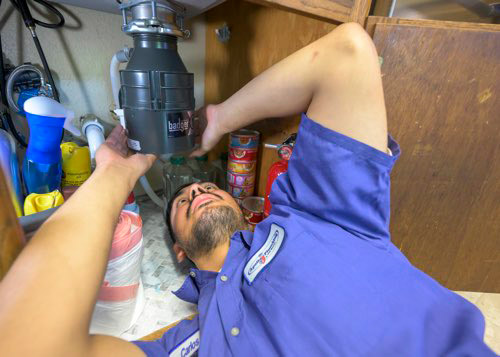
Apollo Plumbing’s technicians bring real experience to every garbage disposal installation in Stanwood, WA. Your installation team handles both the electrical and plumbing connections that make disposals work properly.
These professionals have completed hundreds of installations, so they know exactly what your kitchen needs. They diagnose problems first, then install your new unit, and finally provide follow-up care to keep everything running smoothly. This approach means your garbage disposal works right from day one.
Your home deserves installation done the right way, not the DIY way that often creates bigger problems. Apollo Plumbing’s expertise extends far beyond garbage disposals. The company handles trenchless sewer relining, leak detection, drain cleaning, and water heater installation. This broad knowledge helps technicians spot issues that other installers might miss.
You get safe, efficient, and code-compliant work that protects your home’s plumbing system. Under the 2023 National Electrical Code (NEC) adopted in Washington State, all kitchen receptacles must now be GFCI-protected, including the hidden outlets inside lower cabinets dedicated to garbage disposals. Apollo’s technicians stay current with these strict electrical codes that most homeowners don’t even know exist.
Choosing professional expertise saves you money, time, and headaches down the road.
F.A.Q.’s – Garbage Disposal Install in Stanwood
1. Why should I hire an expert for garbage disposal installation in Stanwood, WA?
Hiring a pro ensures your unit works safely from day one. Licensed plumbers know Stanwood’s local codes and can prevent the leaks or electrical issues that DIY attempts often miss. Most professional installations are wrapped up in just 1 to 2 hours.
2. How long does a typical garbage disposal installation take in Stanwood?
Most installations take 1 to 2 hours. If you’re replacing an existing unit, experienced installers typically finish in about 45 minutes.
3. What should I look for when choosing a garbage disposal installation service in Stanwood, WA?
Look for licensed plumbers with solid disposal installation experience. Check their customer reviews and confirm they offer at least a 1-year warranty on labor, which is standard for quality installers.
4. Do I need a permit for garbage disposal installation in Stanwood?
Most residential installations don’t require permits in Stanwood. Your licensed installer will know current Washington State plumbing regulations and handle any necessary paperwork if your specific setup requires it.