
If tree roots return after rooter service, it is usually because drain snakes only cut through roots. They do not remove them fully. The remaining roots still take in water and nutrients, so they can regrow and re-enter cracks or joints in the sewer line.
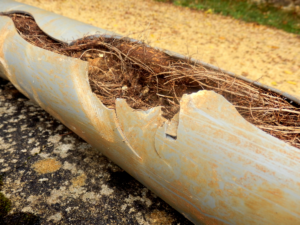
In many cases, recurring roots point to a problem with the condition of the pipe, not the tree itself. Cracks, separated joints, and aging pipes provide easy entry points that allow root intrusion to happen again and again.
Understanding why roots return is the first step toward breaking the cycle. Below are five common reasons tree roots keep coming back, and what you can do to stop them.
 Quick Takeaways
- Rooter machines usually cut roots instead of removing them completely.
- Sewer pipe cracks, separated joints, and damaged connections allow roots to re-enter.
- Tree roots naturally grow toward moisture and nutrients leaking from sewer pipes.
- Some root systems can begin regrowing within weeks after cutting.
- Permanent solutions require fixing the damaged pipe or thoroughly removing the root mass.
Why Tree Roots Grow Back After Rooter Service
A mechanical rooter machine uses a rotating cable with cutting blades to slice through roots blocking the sewer line. This quickly restores drainage but typically doesn’t remove the entire root system.
Think of it like cutting weeds with a string trimmer instead of pulling them out by the roots. The visible growth disappears, but the roots remain alive and ready to grow back.
Because the opening in the sewer pipe is still there, roots eventually find their way back inside. Unless the entry point is repaired, recurring root problems are expected.
1. Rooter Machines Don’t Remove the Entire Root System
Traditional cable machines are designed to restore flow—not completely eliminate roots in your sewer.
They cut away enough of the root mass to clear the blockage, but most of the roots remain outside the pipe. Since they’re still connected to the tree, they continue growing and searching for moisture.
This is why slow regrowth after rooter service is normal. Depending on the tree species and growing conditions, roots can begin returning within weeks or months.
2. Your Sewer Pipe Still Has Cracks or Open Joints
Tree roots rarely damage a healthy sewer line. Instead, they take advantage of existing weaknesses.
Common entry points include:
- Cracked sewer pipes
- Separated joints
- Offset pipe connections
- Broken fittings
- Deteriorating cast iron sewer pipes
Once roots find an opening, they continue expanding inside the sewer system. Until those defects are repaired, roots have an open invitation to return.
3. Tree Roots Naturally Follow Water and Nutrients
Tree roots grow wherever they can find moisture, oxygen, and nutrients. A leaking sewer line provides all three.
Even a small crack allows wastewater to seep into the surrounding soil. That moisture attracts nearby roots, which gradually grow toward the source.
Over time, small feeder roots enter the pipe through tiny openings. As they keep growing, they form a larger root mass. This mass can block flow and cause repeated backups.
4. Some Removal Methods Leave More Roots Behind Than Others
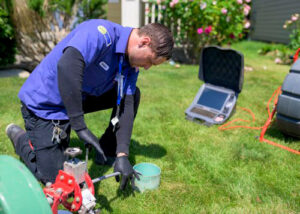 Not every root removal method cleans a sewer line equally. The amount of root material removed directly affects how quickly roots are likely to return.
Traditional Rooter Cable
A traditional rooter cable cuts a narrow path through roots so wastewater can flow again.
This provides fast relief, but it leaves much of the root mass attached to the outside of the pipe. As a result, it often has the quickest regrowth.
Hydro Jetting
Hydro jetting uses high pressure water to scour the inside of sewer pipes.
In addition to removing more roots than a standard cable, it washes away grease, sludge, and other debris coating the pipe walls. While hydro jetting offers a more thorough cleaning, it still doesn’t repair cracked pipes or damaged joints where roots enter.
Flex Shaft Technology
Flex Shaft technology uses a high-speed rotating chain to scrape the entire inside circumference of the pipe.
Compared to a traditional cable, it removes significantly more root material and cleans the pipe walls more completely. It’s often paired with a camera inspection. This helps plumbers confirm results. It also helps them find pipe damage that still needs repair.
5. The Underlying Pipe Damage Was Never Repaired
Cleaning a sewer line restores flow. Repairing the pipe prevents roots from coming back.
If tree roots keep entering the same pipe section, the real issue is often a crack. It can also be a broken joint, or a worn sewer pipe.
Depending on the condition of the pipe, long-term solutions may include:
- Trenchless pipe lining
- Spot repairs
- Sewer line replacement
Although these repairs cost more at first than repeated root removal, they can save homeowners money over time.
How to Keep Tree Roots from Coming Back
While no cleaning method can guarantee roots will never return, these steps can greatly reduce future problems:
- Schedule periodic camera inspections to monitor the condition of your sewer system.
- Remove roots before they develop into complete blockages.
- Repair cracked, offset, or separated sewer pipes.
- Consider pipe lining or sewer replacement if root intrusion continues.
- Avoid planting large trees directly above underground sewer lines whenever possible.
Taking care of small issues early is much less expensive than repairing extensive root damage later.
FAQ: Tree Roots in Sewer Lines
How long does it take tree roots to grow back after rooter service?
It depends on the tree species, growing conditions, and how much of the root mass was removed. In many cases, roots begin regrowing within weeks and can become a problem again within several months.
Will hydro jetting keep tree roots from coming back?
Hydro jetting removes more roots and cleans sewer pipes better than a traditional rooter cable. However, if cracks or separated joints remain, roots will eventually return through those openings.
Does Flex Shaft remove tree roots permanently?
No. Flex Shaft technology removes more root material than traditional snaking, but it doesn’t repair damaged sewer pipes. If an entry point remains, new roots can still grow back over time.
Can tree roots grow through PVC sewer pipe?
Tree roots generally don’t penetrate intact PVC pipe. They usually enter through separated joints, damaged fittings, or existing cracks rather than growing through solid pipe walls.
When should a sewer line be repaired instead of cleaned?
If you need annual root removal, experience frequent backups, or a camera inspection reveals cracks or broken joints, repairing the sewer line is often the better long-term solution.
When Recurring Tree Roots Require Professional Sewer Repair
Occasional root removal may be enough for minor intrusion. However, recurring problems usually indicate a larger issue within the sewer system.
Professional repair is often recommended if you experience:
- Frequent sewer backups
- Annual root removal service
- Multiple areas of root intrusion
- Camera inspection findings showing cracks, separated joints, or deteriorated pipes
Over time, repeated cleanings often cost more than repairing the damaged section of sewer pipe.
Stop the Cycle of Recurring Tree Roots
 If tree roots keep coming back, it’s time to fix the cause—not just the clog.
Apollo Plumbing provides professional sewer camera inspections, sewer rooter service, trenchless pipe lining, and sewer line replacement throughout Everett, WA and nearby areas. Our technicians can identify where roots are entering your sewer line and recommend the most effective long-term solution.
With our Ready right now plumbers, you don’t have to keep dealing with the same recurring root problems. We’ll help restore your sewer line and keep it flowing reliably for years to come.