 A clogged kitchen drain is one of the most common plumbing problems homeowners deal with. Between food scraps, grease, soap residue, and garbage disposal misuse, it doesn’t take much for buildup to form inside your sink drain.
Most clogs develop gradually. Grease coats the pipe walls, food debris sticks to it, and the drain slowly narrows until water can’t move freely. The result is a clogged kitchen sink that drains slowly, smells bad, or fills with standing water.
The good news is that many minor clogs can be cleared with simple household methods. However, deeper blockages inside the drain pipe may require professional drain clearing.
In this guide, we’ll explain why kitchen drains clog, the warning signs to watch for, and several proven ways to unclog a kitchen drain safely.
Quick Takeaways
- A kitchen drain clogged with grease, food scraps, or soap buildup will usually drain slowly or stop completely.
- Boiling water, plunging, and baking soda solutions can clear minor clogs.
- Deep clogs often form farther down the drain pipe or in the main kitchen line.
- Repeated clogs usually indicate buildup in the drain system.
- Professional drain clearing may be necessary if water backs up or DIY methods fail.
Why Kitchen Drains Get Clogged
Kitchen drain blockages rarely happen overnight. Most start as small layers of debris that collect inside the pipe. Over time, those layers trap more waste and restrict water flow.
Eventually, the sink drain becomes partially or completely blocked.
The most common causes include the following.
1. Grease and Cooking Oils
Grease is one of the biggest causes of a clogged kitchen sink.
When hot grease enters the drain, it flows easily. But as it cools, it hardens along the pipe walls. That sticky layer traps food debris, soap residue, and other particles.
Over time, the pipe narrows until water struggles to pass through.
2. Food Scraps
Certain foods break down poorly inside plumbing systems. Rice, pasta, coffee grounds, and fibrous vegetables can clump together inside the sink drain.
Even with a garbage disposal, large food scraps may not grind properly and can collect deeper in the pipe.
3. Soap and Detergent Residue
Dish soap and detergents can combine with grease and food debris. This mixture creates a sticky residue that coats the inside of the drain pipe.
Once buildup forms, it traps additional particles and gradually slows drainage.
4. Garbage Disposal Problems
A garbage disposal can help reduce food waste, but it isn’t designed to handle everything.
If too much food goes into the disposal at once, or if water doesn’t run long enough, debris can collect in the pipe.
In homes with a double sink, waste can also settle in the connecting pipe between the two basins.
Signs Your Kitchen Drain Is Clogged
Kitchen drain problems often show warning signs before the sink stops working completely.
 Common symptoms include:
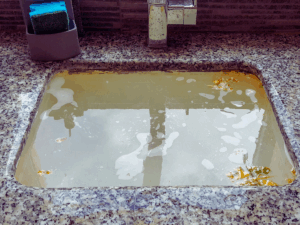
- Slow draining water
- Standing water in the sink
- Gurgling sounds coming from the drain
- Unpleasant odors from the kitchen sink
- Water backing up into the sink
These signals often indicate debris buildup inside the kitchen drain pipe or the P-trap under the sink.
If ignored, the blockage can grow until water stops draining entirely.
How to Fix a Clogged Kitchen Drain
Many homeowners can unclog a kitchen drain using simple household tools. Minor clogs near the drain opening often respond well to these basic methods.
Start with the easiest solutions first before moving to more involved repairs.
Flush the Drain With Boiling Water
Hot water can help break down grease buildup inside pipes.
Bring a pot of water to a boil and slowly pour it down the sink drain. Allow the hot water to sit for a few minutes before running additional hot water from the faucet.
This method works best for grease-related clogs.
If the drain improves but does not fully clear, repeat the process once or twice.
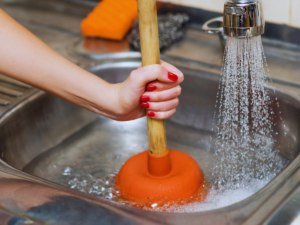
Use a Sink Plunger
A plunger can dislodge debris stuck near the drain opening.
First, remove standing water until the sink is only partially filled. Place the plunger over the drain and create a tight seal around the opening.
Push down and pull up firmly several times to create suction. After plunging, run water to see if the drain improves.
If you have a double sink, block the second drain with a stopper to maintain pressure.
Try Baking Soda and Vinegar
A mixture of vinegar and baking soda can help loosen buildup inside the pipe.
Pour about one cup of baking soda into the drain followed by one cup of vinegar. The reaction will create bubbling that helps break apart debris.
Let the mixture sit for about 15 minutes, then flush the drain with hot water.
If necessary, repeat the process again to help clear additional buildup.
Clean the P-Trap
The P-trap is the curved pipe located beneath your sink. Food debris often collects here.
Place a bucket underneath the pipe before loosening the slip nuts. Remove the trap carefully and empty the contents.
Rinse the pipe thoroughly before reinstalling it and run water to test the drain.
Use a Drain Snake
If the clog is deeper in the pipe, a hand auger or drain snake may be necessary.
Insert the cable into the sink drain and rotate it while pushing forward. The tool can hook debris or break apart clogs farther down the line.
Once the blockage loosens, run hot water to flush the remaining debris out of the pipe.
What Not to Put Down a Kitchen Drain
Some materials should never go down a kitchen sink because they easily create blockages.
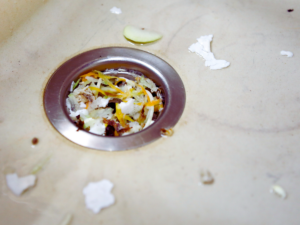 Common problem items include:
- grease and cooking oil
- coffee grounds
- eggshells
- pasta and rice
- fibrous vegetables
- large food scraps
These materials can accumulate inside the drain system and contribute to a clogged kitchen sink over time.
How to Prevent Kitchen Drain Clogs
A few simple habits can significantly reduce the risk of future drain problems.
Helpful prevention tips include:
- run hot water after washing dishes
- scrape food scraps into the trash before rinsing plates
- avoid pouring grease down the sink
- flush drains occasionally with hot water
- schedule periodic professional drain maintenance
These small steps help keep debris moving through the pipes instead of collecting inside them.
When a Clogged Kitchen Drain Requires a Plumber
Sometimes DIY solutions are not enough to clear the blockage.
You may need professional help if you notice:
- recurring clogs
- water backing up into the sink
- foul sewer odors
- multiple drains clogging at once
- slow drainage even after cleaning the P-trap
These situations often indicate a blockage deeper in the drain line where household tools cannot reach.
Professional Drain Clearing for Stubborn Kitchen Drain Clogs
Professional plumbers use specialized tools to remove stubborn clogs and restore proper drainage.
Common professional solutions include:
- drain snaking to break apart deep blockages
- hydro jetting to blast grease buildup from pipes
- camera inspections to locate hidden clogs
- removing hardened debris inside drain lines
These methods allow plumbers to fully clear the pipe rather than just temporarily improving drainage.
Kitchen Drain Clogged FAQ
What causes a kitchen drain to clog the most?
Grease and food debris are the most common causes. Grease coats the inside of pipes while food particles stick to that layer and gradually create a blockage.
Will boiling water unclog a kitchen drain?
Boiling water can help dissolve grease buildup and clear minor clogs. However, it may not work if the blockage is caused by solid debris deeper in the pipe.
Can baking soda and vinegar clear a clogged kitchen sink?
Vinegar and baking soda can loosen minor buildup and help freshen the drain. However, they usually cannot clear heavy grease buildup or solid blockages.
Why does my kitchen drain keep clogging?
Repeated clogs usually indicate buildup deeper inside the drain line. Grease accumulation, improper garbage disposal use, or pipe buildup may be contributing to the problem.
When should I call a plumber for a clogged kitchen drain?
You should contact a plumber if DIY methods fail, water backs up into the sink, or multiple drains in your home begin clogging at the same time.
Need Drain Clearing in Everett? Apollo Plumbing Can Help
 If your kitchen drain is clogged and DIY solutions are not working, professional drain clearing may be the fastest way to solve the problem.
Apollo Plumbing provides expert drain clearing services in Everett, WA and surrounding communities. Our experienced plumbers use advanced equipment to locate and remove stubborn drain blockages safely.
If your clogged kitchen sink keeps backing up or your drain refuses to clear, our team is ready right now to restore proper drainage and protect your plumbing system.
Contact Apollo Plumbing today to schedule professional drain clearing and get your kitchen sink flowing again.