
Yes, a plumbing leak can cause a ceiling to collapse. Water can soak into ceiling drywall, add weight, and weaken the material and its attachments. Large leaks and prolonged water exposure increase the risk.
Sagging, bulging, cracking, and falling debris are warning signs. Stay away from damaged ceiling areas until they are inspected.
A ceiling collapse does not always happen suddenly. Water damage can develop over time as moisture spreads through drywall, insulation, and ceiling framing.
Even a small plumbing leak can become dangerous if it continues long enough.
Quick Takeaways
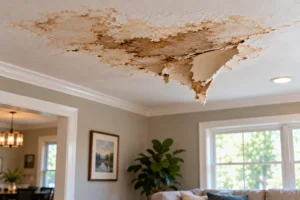 Plumbing leaks can cause ceiling drywall to collapse.
- Water-soaked drywall becomes heavier and loses strength.
- Sagging, bulging, cracking, and falling debris can indicate a collapse risk.
- A water-damaged ceiling can fail without obvious warning signs.
- Keep people away from damaged ceilings and stop the leak if it is safe.
- Severely water-damaged drywall and insulation may need replacement.
How Can a Plumbing Leak Cause a Ceiling to Collapse?
A plumbing leak can cause a ceiling to collapse when water saturates the drywall and weakens its attachment to the ceiling framing. Wet drywall becomes heavier and loses strength, increasing the risk of failure.
Water can escape from leaking supply pipes, drainpipes, shower plumbing, or bathroom fixtures above the ceiling.
As the leak continues, moisture can spread through the ceiling cavity. Drywall may absorb water, while insulation can become saturated. Water may also collect above the ceiling surface.
Eventually, the drywall or its fasteners may no longer support the added weight. Sections of the ceiling can break away and fall.
Prolonged water exposure can also damage wooden ceiling joists and other framing materials. However, a drywall ceiling collapse does not necessarily mean the home’s structural framing has collapsed.
5 Warning Signs Your Ceiling Could Collapse From Water Damage
Sagging drywall, bulging areas, cracks, active dripping, and falling debris can indicate a ceiling is weakened by water damage. Not every ceiling will show all five signs before failing.
1. Sagging or Drooping Ceiling
A sagging ceiling is one of the clearest warning signs of serious water damage. Ceiling drywall may begin bowing downward as it absorbs moisture or water collects above it.
A noticeable dip or uneven area can indicate that the drywall or its attachments are weakening.
Do not stand beneath a sagging ceiling. The affected section could fall without much warning.
2. Bulging or Bubbling Drywall
Bulging or bubbling ceiling drywall can indicate trapped moisture or water-damaged materials.
Water may collect above the ceiling or soak into the drywall. Paint can blister, and sections of the ceiling may appear swollen.
A large bulge is especially concerning because the material may be holding water or losing its strength.
Do not press or puncture a bulging ceiling. Disturbing weakened drywall could cause part of it to fall.
3. Cracks or Separating Ceiling Seams
New cracks or separating drywall seams can indicate movement or weakened ceiling attachments.
Water damage may cause drywall to soften, sag, or pull away from the framing. Cracks can develop where ceiling panels meet or around damaged areas.
Not every ceiling crack is caused by a plumbing leak. Normal settling and other building movement can also cause cracks.
However, new cracks combined with water stains, sagging, or active dripping should be treated as a warning sign.
4. Active Water Dripping Through the Ceiling
Water dripping through a ceiling indicates an active leak that needs immediate attention.
Water may drip through drywall, ceiling seams, cracks, or openings around light fixtures. The visible dripping may represent only part of the moisture trapped above the ceiling.
Active dripping does not automatically mean a collapse is about to happen. However, continued water exposure can weaken ceiling materials and increase the risk.
Water near electrical fixtures also creates a potential shock hazard.
5. Falling Paint, Plaster, or Drywall Pieces
Falling ceiling material can indicate that water damage has weakened the surface.
Paint may peel, drywall can crumble, and plaster may separate from the ceiling. Small pieces of material may fall before a larger section fails.
Falling debris is a reason to leave the affected area immediately.
Do not attempt to remove loose ceiling materials yourself while the ceiling may still be unstable.
How Long Does It Take for a Ceiling to Collapse From a Leak?
There is no fixed timeline for a water-damaged ceiling to collapse. A major plumbing leak can cause ceiling failure much faster than a small, slow leak.
The amount of time depends on several conditions:
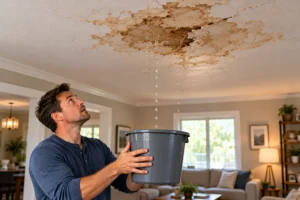 Amount of water: A burst supply pipe can release much more water than a small dripping connection.
- Duration of the leak: Longer exposure allows moisture to spread through ceiling materials.
- Ceiling material: Drywall thickness, construction, and material condition affect how the ceiling responds to water.
- Condition of fasteners: Damaged or weakened attachments may be less able to support wet drywall.
- Trapped water: Water collecting above the ceiling can add weight and increase the risk of failure.
A small plumbing leak may cause damage gradually. A large leak can saturate ceiling materials much more quickly.
A ceiling may also remain standing despite serious hidden water damage. The absence of visible sagging does not guarantee that the ceiling is safe.
What Should You Do If Your Ceiling Is Leaking or Sagging?
Leave the affected area and keep other people away from the damaged ceiling. Stop the water source only if you can reach the shutoff valve safely.
Follow these steps:
- Leave the affected area: Keep children, pets, and other occupants away from sagging drywall, falling debris, or active leaks.
- Shut off the water supply if safe: Use the nearest accessible shutoff valve or the home’s main water shutoff if a plumbing leak is suspected. Do not enter an unsafe area to reach it.
- Stay away from electrical fixtures: Do not touch wet lights, switches, outlets, or electrical equipment. A qualified electrician may need to make the area safe.
- Do not disturb the ceiling: Avoid pressing, puncturing, or attempting to support bulging drywall. The damaged material could fall.
- Contact a plumber: A plumber can locate the leaking supply pipe, drainpipe, or plumbing connection and stop the water.
- Have the ceiling assessed: A qualified restoration or building professional should evaluate damaged drywall, insulation, and framing before the area is used again.
If the ceiling is badly sagging, collapsing, or dropping large pieces, stay out of the room. Seek emergency help if needed.
Does a Water-Damaged Ceiling Need to Be Replaced?
Severely saturated, sagging, crumbling, or weakened ceiling drywall usually needs replacement. Minor water stains may be repairable if the drywall is dry, sound, and no longer exposed to moisture.
A brown water stain does not automatically mean the entire ceiling needs to be replaced. However, the source of the moisture should be identified before cosmetic repairs begin.
Ceiling repairs may involve:
- Removing saturated or weakened drywall.
- Replacing insulation that cannot be properly dried or restored.
- Inspecting wooden joists and other framing for moisture damage.
- Drying the ceiling cavity.
- Installing new drywall and finishing the ceiling surface.
The EPA’s guidance on mold and moisture recommends drying wet materials promptly and addressing the source of water to prevent mold growth.
The plumbing leak must be repaired before the ceiling is restored. Painting over a water stain or patching damaged drywall will not solve an active leak.
FAQs
Can a Ceiling Collapse From a Small Water Leak?
Yes. A small plumbing leak can eventually cause a ceiling to collapse if it continues long enough. Repeated moisture exposure can weaken drywall, damage fasteners, and saturate insulation. The size of the visible water stain does not always reflect the extent of the damage above the ceiling.
Can a Ceiling Collapse Without Sagging First?
Yes. A water-damaged ceiling can collapse without obvious sagging beforehand. Moisture may weaken drywall or its attachments above the visible surface. Some ceilings show cracks, stains, or bulging before failure, but warning signs are not always present.
Is a Brown Water Stain on the Ceiling Dangerous?
A brown ceiling stain does not automatically mean the ceiling is about to collapse. However, the discoloration may indicate an active or previous plumbing leak. The ceiling should be inspected to determine whether moisture remains and whether the drywall or framing has been damaged.
Can an Upstairs Shower Leak Cause the Ceiling Below to Collapse?
Yes. An upstairs shower leak can saturate the ceiling below and eventually cause drywall to collapse. Leaking shower drains, damaged supply pipes, failed shower pans, and waterproofing problems can allow water to enter the floor cavity.
If the leak appears when someone showers, learn more about the 6 reasons your ceiling leaks when you use the shower.
Get Your Ceiling Leak Repaired in Everett, WA
 Stopping the plumbing leak is the first step toward preventing further ceiling damage. A leaking supply pipe, drainpipe, or plumbing connection can continue releasing water into the ceiling until the source is repaired.
Apollo Plumbing provides ceiling leak repair in Everett, WA. Our plumbers can locate hidden plumbing leaks, identify damaged pipes and connections, and recommend the appropriate plumbing repairs.
If you notice water stains, active dripping, or other signs of a ceiling leak, contact Apollo Plumbing before the damage gets worse.