A toilet rough-in is the distance from your finished wall to the center of the drain pipe under your toilet. That’s the simple version.
It sounds like a small thing, but it decides whether a toilet fits the space or leaves you with gaps, leaks, or a return trip to the store.
Some older homes in Everett and nearby towns in Washington have rough-in sizes that differ from today’s common standards. So you should measure the toilet rough before buying anything.
This guide walks you through each step, so you get the measurement right the first time.
Quick Takeaways
- Most toilets use a 12-inch rough-in, but 10-inch and 14-inch sizes appear often in older homes.
- Measure from the finished wall — not the baseboard — to the center of the toilet flange bolts.
- If the toilet is installed, measure to the center of the closet bolts on each side.
- You need at least 15 inches of side clearance and 24 inches of front clearance for a proper toilet fit.
- Accurate rough-in measurement prevents leaks, gaps, and wasted money on the wrong toilet.
What Is a Toilet Rough-In?
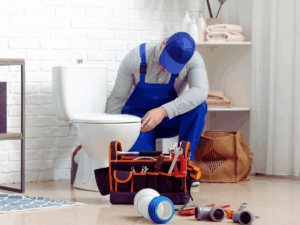 A toilet rough-in is the measurement that tells you how far the drain sits from the wall. You use it to pick a toilet that matches the drain position.
If the size is wrong, the toilet will not sit right, or it may not sit at all.
Toilet rough sizes follow three main standards: 10 inches, 12 inches, and 14 inches. Most stores carry 12-inch toilets because that is the common size in newer homes, but older homes often use the 10-inch or 14-inch sizes. This is why checking your exact number matters.
Tools You Need to Measure Your Toilet Rough-In
- Tape measure
- Pencil
- Notepad
- Optional: angle finder or square
- Tip: Turn on good lighting. It makes everything easier.
How to Measure Toilet Rough-In (Step-by-Step)
Step 1 — Locate the Center of the Drain or Closet Bolts
If your toilet is installed, look at the bolts that hold the toilet to the floor. They sit under small caps on each side. You want the center of those bolts.
If the toilet is removed, you want the center of the drain opening, which is the flange. That center point is your reference for the entire measurement.
Step 2 — Measure From the Finished Wall
Place your tape measure against the finished wall, not the baseboard. The baseboard adds extra thickness, and it throws off the number.
Extend the tape to the center of the bolts or the drain. You want this measurement to be accurate down to 1/8 inch. A small difference can shift the toilet forward or backward more than you want.
Step 3 — Record the Rough-In Measurement
Now look at the number.
- If it falls between 11.5 inches and 12.5 inches, you can call it a 12-inch rough-in.
- If it is under 11 inches, you likely have a 10-inch rough-in.
- If it is over 13 inches, you may have a 14-inch rough-in.
This is where older homes show their age. You might see sizes that fall between these groups. If that happens, write the exact number down.
Step 4 — Verify Clearance Requirements
You need at least 15 inches of clearance from the center of the toilet to the nearest wall or object on each side. You also need 24 inches of clear space in front of the toilet.
This gives the toilet room to sit straight and gives you room to sit on it without feeling squeezed.
Step 5 — Check the Water Supply Line Position
Look at the water supply line. The ideal spot sits a few inches above the floor and a few inches to the side of the centerline.
If the line sits too close or too far, it can get in the way during installation or make the final fit look awkward. Write this down along with your toilet rough number.
How to Measure Rough-In for Special Toilet Types
 Corner Toilets
Corner toilets use two diagonal walls instead of one. Measure from each wall to the center of the drain. Both numbers should match. If they don’t, the toilet may not sit straight.
Offset Flanges
An offset flange shifts the drain by an inch or two. You see these in tight bathrooms or older homes. If you have one, the rough-in number may not match a standard size, so take the exact measurement. Offset flanges change how far the toilet sits from the wall.
Wall-Mounted Toilets
Wall-mounted toilets use a vertical rough-in behind the wall. The height matters instead of the distance from the floor. This type of measurement is best handled by a professional plumber because small mistakes can cause leaks inside the wall.
Common Mistakes People Make When Measuring Rough-In
A few mistakes come up all the time. Measuring from the baseboard. Using the front of the bowl instead of the bolt center. Forgetting side clearance.
Assuming everything is 12 inches. Overlooking the supply line. One small slip in any of these spots can throw off the entire fit.
How Rough-In Size Affects Which Toilet You Can Buy
A toilet built for a 10-inch rough-in will not sit right on a 12-inch drain. A 12-inch toilet will sit too far from the wall if the rough-in is 14 inches. Picking the wrong size means you waste money and time.
If your bathroom is small, you may want a round bowl to save space. If you plan a remodel, matching toilet rough sizes early saves trouble later.
When You Should Replace the Toilet Flange Instead
The flange can rot or crack. If you see breaks, soft spots, or wobble at the base, the flange might need replacement. A damaged flange can affect the toilet rough measurement because the toilet may not sit flat. If you think the flange is the problem, call a plumber.
Professional vs. DIY Rough-In Measurement
DIY measurement works fine if you have a clear space and a simple setup. The risk comes from mistakes that cause returns, delays, or a toilet that leaks.
A professional plumber measures everything for you and handles any flange or clearance issues. This saves time and avoids problems.
FAQ – How to Measure Toilet Rough-In
What is the standard rough-in for a toilet?
Most new toilets use 12 inches, but older homes often use 10 or 14 inches.
Can I install a 12-inch toilet on a 10-inch rough-in?
It will not fit. The toilet will hit the wall or sit crooked.
How do I measure rough-in if my toilet is still installed?
Measure from the finished wall to the center of the bolt caps.
What if my rough-in is not exactly 10, 12, or 14 inches?
Write down the exact number. Some toilets fit slight variations.
Do older WA homes usually have non-standard rough-ins?
Yes. Many older homes in Everett and nearby towns use 10-inch or 14-inch sizes.
How much clearance do I need around a toilet?
You need 15 inches to each side and 24 inches in front.
How do I measure a rough-in in a tight bathroom?
Use a small tape measure and take your time. If the space is too tight, a plumber can help.
Need Help Measuring Your Toilet Rough-In? Apollo Plumbing Is Ready Right Now.
 If you want a perfect toilet fit without any hassle, Apollo Plumbing can measure, install, and repair toilets. We serve Everett, WA, and nearby areas.
Our licensed plumbers take care of toilet measurements, flange problems, and full replacements. This helps you avoid wasted time and bad fits.
Call Apollo Plumbing today — your personal plumber, ready right now.