
 Homeowners rarely think about their toilets until something goes wrong. When a toilet stops working properly, the disruption can be immediate and inconvenient.
Deciding to repair or replace it can save you money. It also helps protect your bathroom from water damage and prevents frustration.
Short Answer: Repair your toilet if the issue is minor, such as a running toilet or broken handle. Replace it if it’s old, leaking, cracked, or requires frequent repairs.
Understanding which choice makes sense depends on the problem, the toilet’s age, and the overall condition of the fixture.
Quick Summary — Repair or Replace Comparison Table
| Condition | Recommended Action | Why |
|---|---|---|
| Running toilet | 🔧 Repair | Cheap, quick fix |
| Broken handle | 🔧 Repair | Replaceable part |
| Cracked porcelain | 🚫 Replace | Can’t be sealed long-term |
| Leaking base | 🚫 Replace | Structural damage risk |
| Frequent clogs | 🚫 Replace | Outdated design |
| Minor leaks | 🔧 Repair | Usually caused by worn parts |
| Toilet older than 15 years | 🚫 Replace | Inefficient and prone to failure |
When Toilet Repair Is the Smart Move
Repair is often the most practical choice for smaller issues. A running toilet can be fixed by replacing the flapper valve or fill valve. A loose handle or weak flush may need an inexpensive part swap. These repairs take little time and prevent larger issues from developing.
If your toilet is under 10 to 12 years old, has no visible cracks, and works well otherwise, repairing it makes sense. The structure is sound, and repairs are cost-effective. In most cases, fixing a simple problem costs less than half the price of a new toilet.
Signs It’s Time to Replace Your Toilet
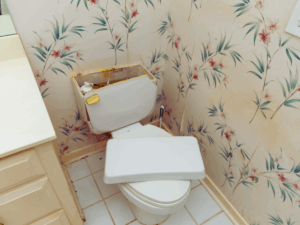 Certain problems signal that repair is no longer reliable. Cracks in the porcelain—especially in the bowl or tank—can expand and lead to leaks. If you see a hairline crack below the water line, it’s time to replace your toilet.
Leaks around the base indicate structural failure or a damaged seal. Replacing the wax ring may help temporarily, but recurring leaks suggest deeper issues.
Frequent clogs are another warning. Older toilets may not have the flushing power of modern designs. If you use a plunger often, replacing the fixture may save time and water.
Finally, if you’re scheduling toilet repairs several times a year, replacement is the better investment. Toilets built before 1994 can use 3.5 to 7 gallons per flush, while new low-flow toilets use just 1.28 to 1.6 gallons, reducing your water bill and conserving resources.
Cost Comparison — Repairing vs Replacing a Toilet
Repairing a toilet is less expensive upfront. The average cost for repairs ranges from $150 to $400, depending on parts and labor. Replacing a toilet generally costs $375 to $500, including installation.
A good rule of thumb: if the repair cost exceeds half the price of a new toilet, replacement is the smarter option. A one-time replacement can also save future plumbing expenses from recurring failures.
Long-Term Value of Replacing an Old Toilet
New toilets improve efficiency, performance, and comfort. Models certified by EPA WaterSense can save up to 13,000 gallons per year compared to older toilets. Dual-flush, comfort-height, and pressure-assisted systems offer smoother operation and better water control.
Upgrading your toilet can also add visual appeal and property value. Homebuyers often notice updated fixtures, and modern designs improve both appearance and usability.
Problems Best Fixed with Simple Repairs
Some issues don’t require replacement.
Professional plumbers can quickly repair:
- A constantly running toilet.
- A weak or inconsistent flush.
- A broken handle or chain.
- Small leaks from tank bolts or fittings.
- A worn-out wax ring or flapper valve.
If the toilet bowl or tank is intact, these fixes are simple and inexpensive.
How to Know If You Should Call a Plumber
If your toilet leaks at the base or under the floor, or if it has cracks near the tank or bowl, you should get professional help. If it clogs often, even with careful use, it’s also a good idea to call an expert.
Unusual sounds, constant refilling, or a continuously running toilet also signal internal valve problems.
If you’re not sure what’s causing the issue, call a licensed plumber for a fast, accurate inspection.
Key Takeaways
- Minor issues → Repair.
- Cracks, leaks, or age → Replace.
- Efficiency upgrades save money long-term.
- Consult a plumber for persistent or recurring problems.
FAQs About Toilet Repair and Replacement
How do I know if my toilet is beyond repair?
If it’s cracked, leaks continuously, or breaks down repeatedly, replacement is more reliable.
How long should a toilet last?
A well-maintained toilet typically lasts 15 to 25 years.
Are new toilets worth the cost?
Yes. They use less water, perform better, and last longer than older models.
Can I repair a toilet myself?
You can replace simple parts like a flapper or handle. For leaks or structural problems, hire a plumber.
What type of toilet should I buy for efficiency?
Choose a WaterSense-certified toilet with a dual-flush or pressure-assisted system.
Need Honest Advice?
 Repairs make sense for newer toilets with minor problems. Replacement is best when damage, leaks, or inefficiency become frequent.
Need honest advice on whether to repair or replace your toilet? Contact Apollo — your trusted Everett, WA ready-right-now plumbers.