
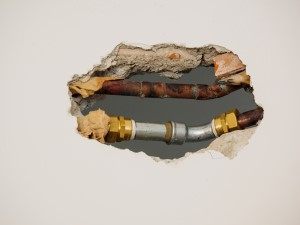
 Most homeowners think plumbing leaks happen suddenly. In reality, most leaks develop for weeks or months inside the plumbing system.
Water may not appear on the floor. But pipes slowly weaken behind walls, under slabs, and above ceilings while hidden moisture quietly spreads through the home.
A small leak inside a water pipe may start with corrosion, pressure stress, or mineral buildup. At first, the damage stays hidden.
Then the warning signs begin. A higher water bill. A drop in water pressure. A musty smell near drywall.
By the time you see water damage, a leak may already cause structural damage, mold or mildew, and costly plumbing issues.
Understanding what happens inside pipes before a leak becomes obvious can help homeowners catch problems earlier, reduce costly repairs, and protect their homes from major water damage.
Quick Takeaways
- Most hidden leaks begin as small internal pipe problems
- Corrosion, pressure changes, and mineral buildup slowly weaken pipes
- Tiny cracks can leak for weeks before visible water appears
- Hidden leaks often lead to mold or mildew, wood rot, and structural damage
- Strange noises, musty smells, and rising water bills are common warning signs
- Regular maintenance and early leak detection help prevent major plumbing issues
- Small leaks left unchecked can eventually burst and flood parts of the home
How Pipes Begin Failing Long Before a Leak Appears
Most plumbing systems do not fail overnight. Pipes experience constant stress every single day. Water moves through the system under pressure while temperature changes cause expansion and contraction inside the pipe walls. Over time, the plumbing system begins wearing down internally.
Older pipes face even more risk. Age, water chemistry, friction, and pressure fluctuations slowly weaken materials from the inside out. The process usually starts microscopically. A homeowner may have no visible signs at first, even while the water pipe is already deteriorating.
Corrosion Slowly Eats Away Pipe Walls
Corrosion is one of the biggest causes of hidden leaks. Older galvanized steel pipes often rust internally, while copper pipes can develop pinhole leaks from oxidation and chemical reactions inside the water supply.
As corrosion spreads, the pipe walls become thinner and weaker. Small weak spots form first. Eventually, those weak areas crack under pressure and allow water to escape into surrounding materials.
This is one reason older homes often develop hidden leaks without warning.
Mineral Buildup Restricts Water Flow
Hard water creates another major problem inside pipes. Minerals like calcium and magnesium slowly collect along the interior walls of the plumbing system.
At first, buildup seems harmless. Then the deposits begin restricting water flow. The plumbing system must work harder to move water through narrow openings, increasing pressure stress in pipes and fittings.
That extra strain can damage joints, weaken seals, and increase the risk of hidden leaks over time.
Water Pressure Stress Weakens Pipe Joints
Pipe joints and fittings usually fail before straight pipe sections do. Every time water pressure changes, the plumbing system absorbs stress.
Water hammer, sudden shutoffs, and pressure spikes place repeated strain on seals and fittings. Pipes also expand and contract with temperature changes. Over time, those repeated movements loosen connections and create small gaps where water can escape.
Many hidden leaks start around vulnerable joints inside walls or beneath floors.
What Happens When Small Cracks Start Forming
 Once tiny fractures develop inside a water pipe, moisture begins escaping slowly into surrounding areas. A small leak may only release a few drops at first, but the damage keeps spreading.
Water often travels far from the original source before homeowners notice anything wrong. Moisture can soak insulation, saturate drywall, weaken wood framing, and create ideal conditions for mold or mildew growth.
The dangerous part is how quietly this happens. Hidden leaks often stay concealed behind building materials until visible damage finally appears.
Early Signs Your Pipes May Be Leaking Internally
Most homes give warning signs before a major plumbing failure happens. The key is recognizing the telltale sign early enough to stop the problem before severe water damage develops.
Unexplained Increases in Water Bills
A sudden increase in your water bill without higher water usage often points to a hidden water leak.
Even a small leak wastes water continuously throughout the day. Over weeks or months, that lost water adds up quickly. If your water bill rises unexpectedly, your plumbing system may already have hidden leaks somewhere inside the home.
Musty Odors Around Walls or Floors
Persistent musty smells usually mean moisture is trapped somewhere it should not be.
Hidden leaks create damp conditions behind walls, beneath flooring, and inside ceilings. Mold or mildew often develops in these dark, wet spaces before visible stains appear.
If certain areas of your home smell damp for no clear reason, a hidden plumbing issue may be developing nearby.
Bubbling Paint or Water Stains
Water leaking behind drywall eventually causes visible cosmetic damage. Paint may bubble, peel, or discolor as moisture spreads through walls and ceilings.
Brown stains, warped trim, and soft drywall are all signs that water damage may already be occurring inside the structure of the home.
Low Water Pressure
A drop in water pressure can indicate hidden pipe damage inside the plumbing system.
When water escapes through cracks or weakened joints, less pressure reaches faucets and fixtures. Some homeowners notice weak showers or inconsistent sink pressure long before they discover the actual leak.
Strange Noises Inside Walls
Dripping, hissing, ticking, or running water sounds inside walls should never be ignored.
If all fixtures are off but you still hear water moving, there may be a hidden leak. It could be behind the walls or under the floor.
Why Hidden Pipe Leaks Become Expensive Fast
Small plumbing leaks rarely stay small. Water continuously spreads into nearby materials, weakening everything it touches.
Drywall absorbs moisture quickly. Wood framing begins rotting. Flooring can warp or separate. Mold or mildew growth may spread through hidden areas of the home.
Leaks left unchecked can even damage foundations in severe cases. Eventually, weakened pipes may burst, turning a simple repair into a major plumbing emergency with costly damage.
The longer hidden leaks remain untreated, the more expensive the damage usually becomes.
Where Hidden Plumbing Leaks Commonly Start
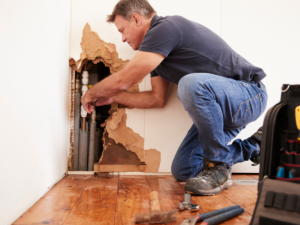 Hidden leaks often develop in areas homeowners rarely inspect, including:
- Behind showers and tubs
- Under kitchen and bathroom sinks
- Inside walls
- Beneath concrete slabs
- Around water heaters
- Near fittings and pipe joints
- Around aging supply lines
- Near appliances connected to the water supply
These areas experience constant moisture exposure, pressure stress, or connection wear over time.
How Professional Leak Detection Finds Problems Early
Modern leak detection allows plumbers to locate hidden leaks without tearing apart large sections of the home. Professional plumbers may use:
- Acoustic listening equipment
- Thermal imaging cameras
- Moisture testing tools
- Video camera inspections
- Pressure testing equipment
These methods help identify hidden water leaks inside walls, beneath flooring, and under slabs while minimizing disruption to the property.
Early leak detection helps homeowners reduce water damage and avoid larger plumbing issues later.
When You Should Call a Leak Detection Plumber
Homeowners should contact a plumber if they notice:
- Persistent musty odors
- Sudden increases in water bills
- Repeated drops in water pressure
- Bubbling paint or ceiling stains
- Warped flooring
- Sounds of running water when fixtures are off
- Mold or mildew growth without a visible source
These warning signs often indicate hidden leaks developing somewhere inside the plumbing system.
Protect Your Home Before a Small Leak Turns Into Major Damage
 A hidden water leak can quietly damage your home long before obvious signs appear. A small leak inside a pipe can lead to mold, structural damage, ruined floors, and costly repairs if ignored.
At Apollo Plumbing, we help homeowners throughout Everett, WA and surrounding areas find hidden leaks early using professional leak detection equipment and proven diagnostic methods.
Whether you have rising water bills, unexplained moisture, or a sudden drop in water pressure, our team is ready right now to locate the problem and recommend the right pipe repair solution before the damage spreads further.
FAQ
Can pipes leak without visible water?
Yes. Hidden leaks often form behind walls, under slabs, or above ceilings. Water can stay hidden for a long time. Damage may not show until later.
What causes pipes to leak inside walls?
Common causes include corrosion, mineral buildup, pressure stress, freezing temperatures, aging materials, and loose pipe fittings.
How long can a hidden leak go unnoticed?
Some hidden leaks can go undetected for weeks or months. This depends on the location, pipe size, and leak severity.
Does homeowners insurance cover hidden plumbing leaks?
Coverage depends on the insurance policy and the type of damage involved. Some policies cover sudden water damage but may not cover long-term neglect or pipe repair costs.
What is the most common sign of a hidden water leak?
A rising water bill is one of the most common warning signs. Musty odors, water stains, and unexplained moisture are also common indicators.
Can small leaks turn into burst pipes?
Yes. Small leaks weaken pipe walls over time. If left unchecked, pressure and corrosion can eventually cause the pipe to burst completely.